Vienna’s market office calls the city the “Christmas capital of Europe”. It is not a modest claim, but there are good reasons for it. This year around 30 Advent and Christmas markets are open in Vienna for weeks, plus some 20 small weekend markets. And the tradition goes back about 400 years, to the very same squares of the old town where you stroll today with a mug of punch in your hand.
The Story of 1296
Many guidebooks say that Duke Albrecht I granted the Viennese a “December market” as early as 1296, the first Christmas market in the world. The City of Vienna sees it more soberly: in 1296 Albrecht renewed the city’s rights, and these included fairs, but no fair at Christmas. Medieval Vienna had no Christmas market.
Huts on the Graben
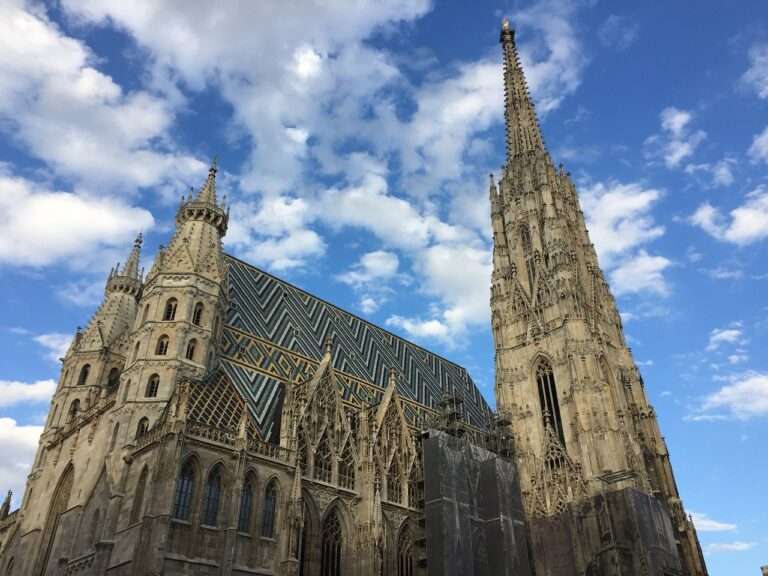
The first Christmas stalls are documented a few centuries later. Records from around 1600 and chronicles from 1626 mention huts on the Graben and the Brandstätte in front of St. Stephen’s Cathedral, set up on 16 and 17 December and taken down on 9 January. Bakers, gingerbread makers and confectioners sold their goods here, and the whole thing was called the Thomasmarkt. It came to an end in 1761.
St. Nicholas and Nativity Scenes on the Freyung
After that, the market stood on the Freyung. The Vienna History Wiki dates the first mention of a “St. Nicholas, Christmas and Nativity Market” with 108 stalls to 1722, the City of Vienna to 1764. The name tells you what mattered then: in Vienna it was still St. Nicholas who brought the presents, and the center of the celebration was the nativity scene, not the Christmas tree. How that came about, and why the Krampus came along, is told in our article Who Brings the Presents in Vienna?
Am Hof: the Birth of the Christkindlmarkt
Because the nativity market got in the way of the regular market on the Freyung, it moved to the square Am Hof on a trial basis in 1842, and for good a year later. Every year on 5 December, 132 stalls were set up there and stayed until New Year’s Day. In the 19th century the market also got the name we know today: Christkindlmarkt, the market of the Christ Child. Around the same time, the Christkind took over the presents from St. Nicholas in Vienna, and the Christmas tree moved into Viennese living rooms. The first one known in Vienna appears in a secret police report in 1814, and you can read that story here.
In 1872 the city council abolished Vienna’s old fairs. Only one was allowed to stay: the Christkindlmarkt. In 1903 its 128 stalls got new huts and, for the first time, electric light.
A Market on the Move
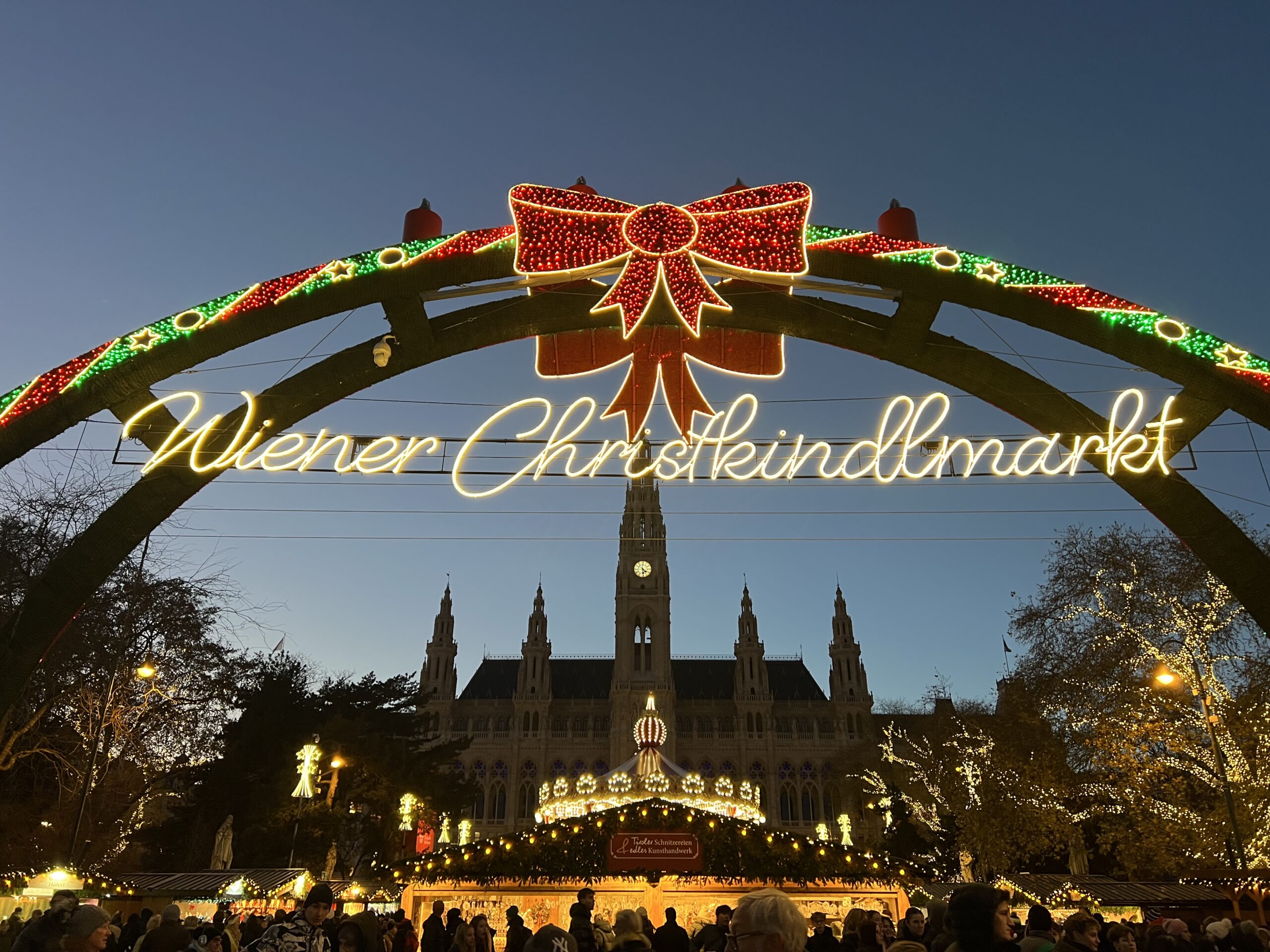
In the 20th century the Christkindlmarkt moved again and again: to Stephansplatz, back to the Freyung, out to the Neubaugürtel, back to Am Hof in the late 1930s and to Stephansplatz during the war. After the war it stood in front of the Messepalast, today’s MuseumsQuartier, and in between once more on the Neubaugürtel. In 1975 it had to make way for an underground car park in front of the Messepalast and moved to Rathausplatz as a temporary solution. That temporary solution is still in place. The great Christmas tree in front of the City Hall has stood there since 1959, and every year a different Austrian province sends it.
From One Market to Many
From the 1980s new markets were added: in Floridsdorf in 1984, the Old Viennese Christmas Market in 1987, first on Michaelerplatz and from 1989 on the Freyung, bringing a market back to its old site, and in 1989 the market at the Old General Hospital. Today most districts have their own Advent market, from the courtyard of Schönbrunn Palace to the small Advent square at the Liechtenstein Garden Palace. You will find our favorites with all opening hours in The Most Beautiful Christmas Markets in Vienna.
What Else Makes Vienna a Christmas City
The chandeliers above the Graben, Advent concerts in St. Stephen’s Cathedral and the International Advent Singing in the festival hall of the City Hall. And a Viennese invention: the snow globe, invented by Erwin Perzy around 1900 in Hernals and still made today at the Original Viennese Snow Globe Manufactory, a lovely gift to take home. Every year the markets come up with new punch creations, from lavender Glühwein to elderflower and gentian punch, and the market office checks that your mug really holds what it promises.
Experience the Markets and Their Stories
On our Christmas market food tour we walk through this history, from Stephansplatz via Am Hof and the Freyung to Rathausplatz, with two mugs of Glühwein and one savory or sweet treat. If you would like more stories and fewer tastings, join our Advent tour.
To the Christmas market food tour →
Sources: Wien Geschichte Wiki, Christkindlmarkt; City of Vienna, Christmas market history; ORF Wien, Vienna as Europe’s Christmas capital.