After a night at the opera or a long night out, Vienna meets at the Würstelstand, the sausage stand: evening dress next to work jackets, a Burenwurst in one hand and mustard in the other. Since 2024 Vienna’s sausage stand culture has been listed in Austria’s national inventory of intangible cultural heritage under the UNESCO convention.
From the sausage man to the stand
Long before there were fixed stands, street cooks roamed Vienna. In the 19th century the “Würstelmann” sold hot sausages from a kettle or a cart. As with tobacco kiosks, the licences often went to war invalids, for whom a stand meant a living. Fixed stands were only permitted in Vienna from 1969; until then they had to remain mobile. The oldest surviving stand, Würstelstand Leo on the Döblinger Gürtel, dates from 1928.
An “Eitrige”, please
The Burenwurst is said to owe its name to the Viennese enthusiasm for the Boers around 1900. Today’s classic is younger: the Käsekrainer, a sausage with little pieces of cheese inside, was invented in the 1970s in Buchkirchen near Wels in Upper Austria and quickly conquered Vienna’s stands. If you want to order like a local, say: “A Eitrige mit an Bugl, an Gschissenen und an Sechzehner-Blech.” Translated: a Käsekrainer with the heel of the bread, sweet mustard and a can of Ottakringer beer, brewed in Vienna’s 16th district. And the question “Süß oder scharf?” is about the mustard.
Famous guests have appreciated the Würstelstand too: Orson Welles wrote in the guest book of the stand by St. Stephen’s and praised the Burenwurst. And at the 1935 World’s Fair in Brussels, Austria presented itself with a Würstelstand as a symbol of hospitality.
Vienna for the tasting
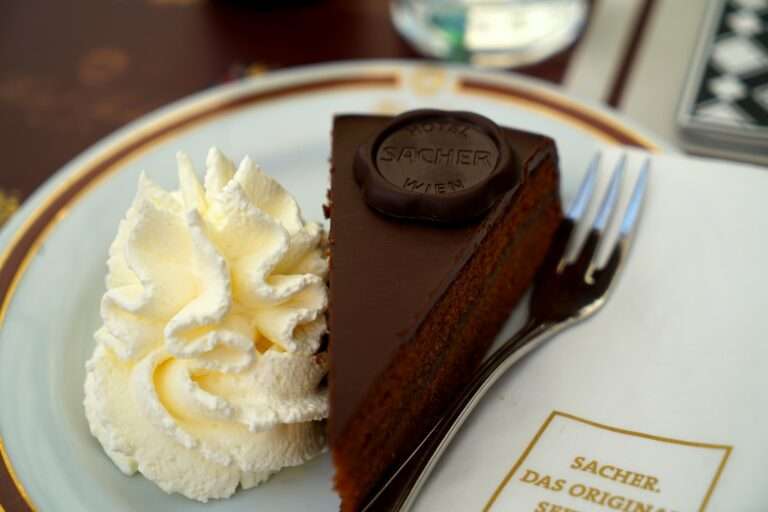
Sausage, bread and mustard are as much part of Vienna for us as a Melange and a slice of cake. On our typical Viennese food tour we taste our way through the city, and our Vienna tips reveal our favourite sausage stands.